حمّل القصص مجاناً وابدأ مغامرتك مع طفلك الآن!

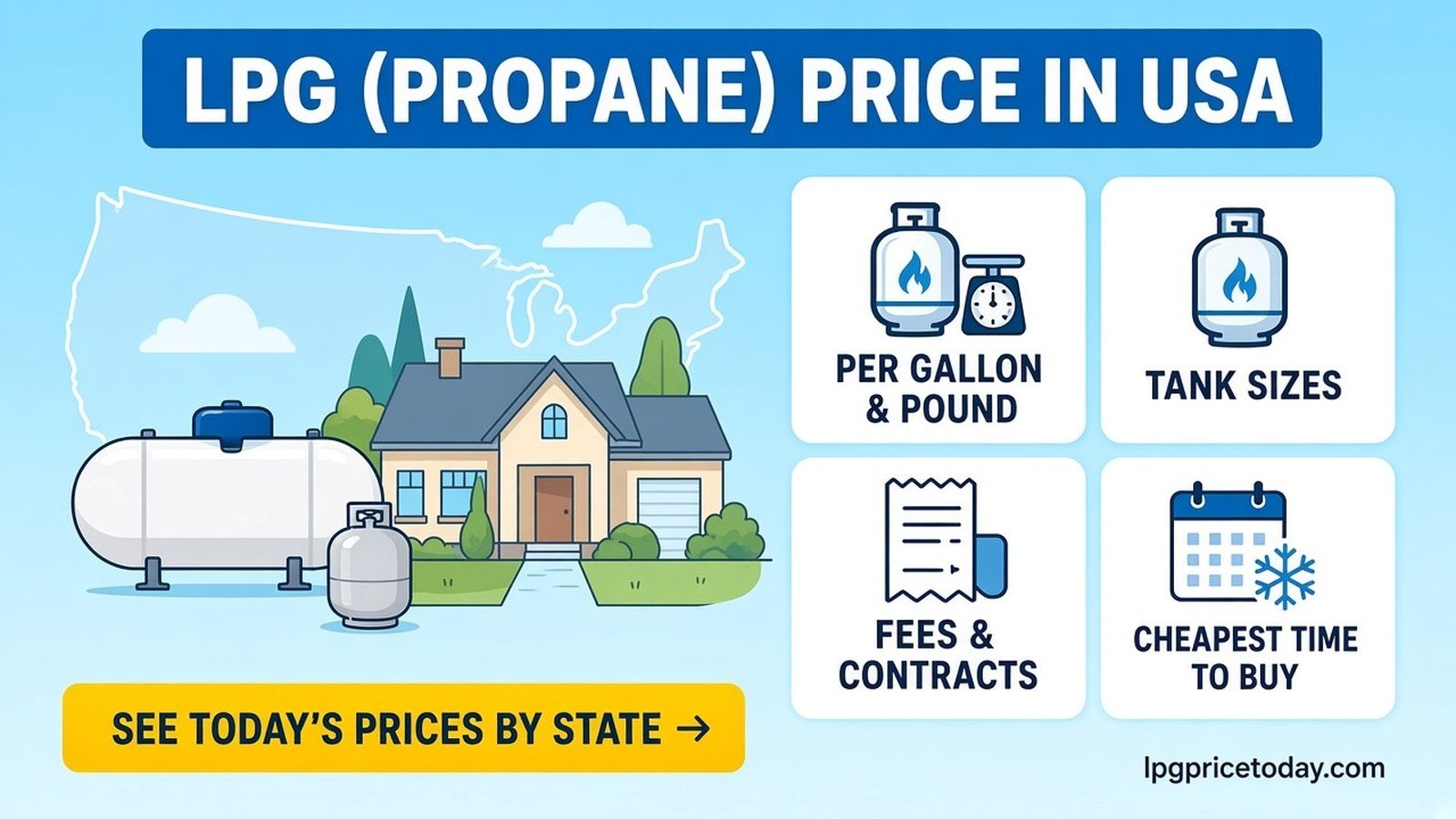
LPG is called propane in the United States. It is sold by the gallon for home tanks and by the pound for small cylinders. Prices change every week and differ a lot from state to state. For the latest figures, see our propane price per gallon by state today.
This guide explains what propane costs and why. You will learn how to convert gallons to pounds or liters, how much your tank holds and how to work out a fill cost. We also cover fees, contracts and the best time to buy. For more price pages, browse US propane prices or our other LPG guides.
Looking for today’s propane price?
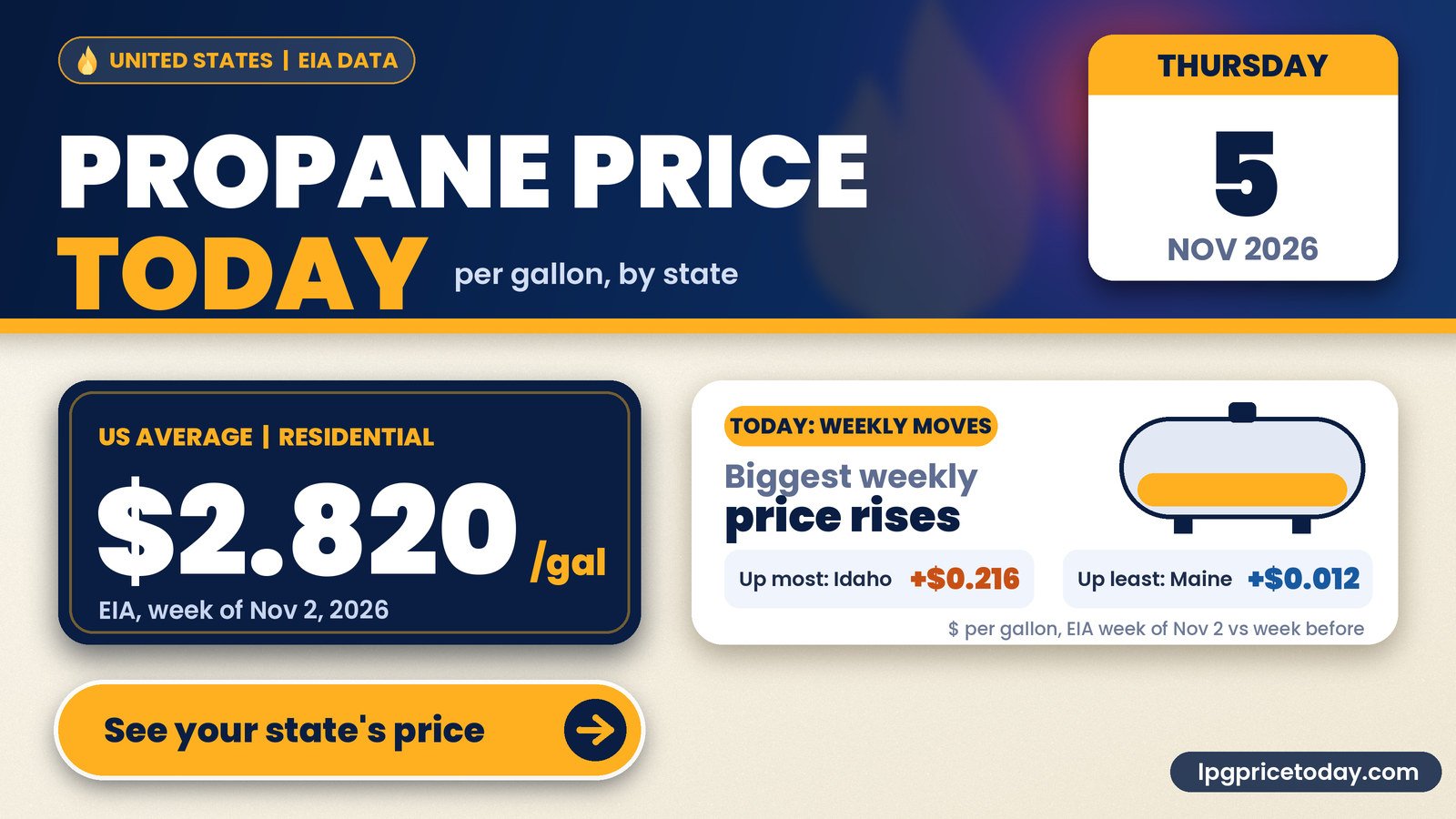
See today’s propane price in every state, updated from the latest EIA data. Our price page is refreshed every day and covers all 50 states.
How much does propane cost in the USA?
Propane in the USA costs a few dollars per gallon for home delivery, but the exact price depends on your state, the season and your supplier. The best public benchmark is the weekly home price survey from the US Energy Information Administration (EIA).
The EIA figure is an average. Your own quote can be higher or lower. Small buyers, rural customers and people who rent their tank often pay more. Large buyers who own their tank often pay less. Check the latest state averages before you call a supplier.
What the national average means
- EIA phones a sample of propane dealers every Monday from October through March (Source 2).
- It publishes residential prices for 38 states. The other 12 states have no official weekly figure (Source 2).
- The price is per gallon and excludes taxes. It also excludes discounts and surcharges for customers outside the normal delivery area (Source 2).
- From April through September, EIA only collects prices once a month (Source 2).
So treat the national average as a yardstick, not as the price on your bill.
LPG price per gallon, pound, kg and liter
To turn a price per gallon into a price per pound, divide it by 4.2. One gallon of propane weighs about 4.2 pounds (Source 6). To get a price per liter, divide by 3.785, because one US gallon is 3.785 liters.
| Unit | Equal to | How to convert a price per gallon |
|---|---|---|
| 1 gallon | about 4.2 lb of propane | — |
| 1 gallon | 3.785 liters | price per gallon ÷ 3.785 = price per liter |
| 1 gallon | about 1.9 kg of propane | price per gallon ÷ 1.9 = price per kg |
| 1 pound | about 0.24 gallon | price per gallon ÷ 4.2 = price per pound |
| 1 gallon | 91,452 Btu of heat | used to compare fuels (Source 4) |
Example: if a supplier quotes $3.00 per gallon, that is about $0.71 per pound, $0.79 per liter or $1.58 per kg. ($3.00 is an example price, not today’s price.)
Propane tank sizes: how many gallons they hold
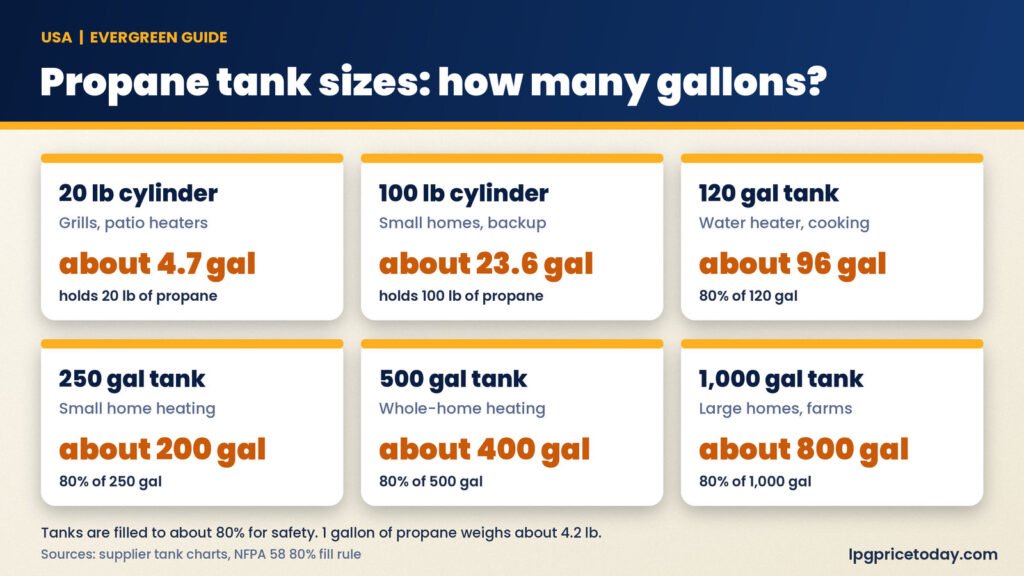
A 20 lb grill cylinder holds about 4.7 gallons. A 500-gallon home tank holds about 400 gallons when full. Big tanks are only filled to about 80% so the liquid has room to expand (Sources 5 and 7).
| Tank or cylinder | Propane when full | Common use |
|---|---|---|
| 20 lb cylinder | about 20 lb (about 4.7 gal) | Grills, patio heaters |
| 30 lb cylinder | about 7.1 gal | RVs, campers |
| 100 lb cylinder | about 100 lb (about 23.6 gal) | Small homes, backup heat |
| 120 gal tank | about 96 gal (80%) | Water heater, cooking, dryer |
| 250 gal tank | about 200 gal (80%) | Small home heating |
| 500 gal tank | about 400 gal (80%) | Whole-home heating |
| 1,000 gal tank | about 800 gal (80%) | Large homes, farms |
How to work out your fill cost
Fill cost = gallons needed × your price per gallon + any fees. Read your tank gauge first. It shows a percent of the tank size, not gallons.
- Take your tank size, for example 500 gallons.
- Subtract the gauge reading from 80%. If the gauge says 30%, you need 80% − 30% = 50%.
- Multiply: 50% × 500 = 250 gallons.
- Multiply by your quoted price and add fees.
Example: 250 gallons × $3.00 = $750, plus any delivery fee. ($3.00 is an example price. Use your supplier’s quote or our state price table.)
Example (100 gallons): 100 gallons × $3.00 = $300 before fees. Many dealers set a minimum delivery, so very small orders can cost more per gallon.
Cylinder exchange or refill?
Refilling a grill cylinder usually costs less per gallon than swapping it. Exchange cages are quick, but many exchange cylinders are filled with less than 20 lb. A refill station fills your own tank and charges for what goes in. Ask how many pounds or gallons you are paying for.
Buy or lease your tank?
Owning your tank lets you buy from any supplier. A leased tank can usually only be filled by the company that owns it. That makes it harder to shop around. Leased tanks may also carry a yearly rental fee. Buying costs more up front but can save money over time.
What drives propane prices
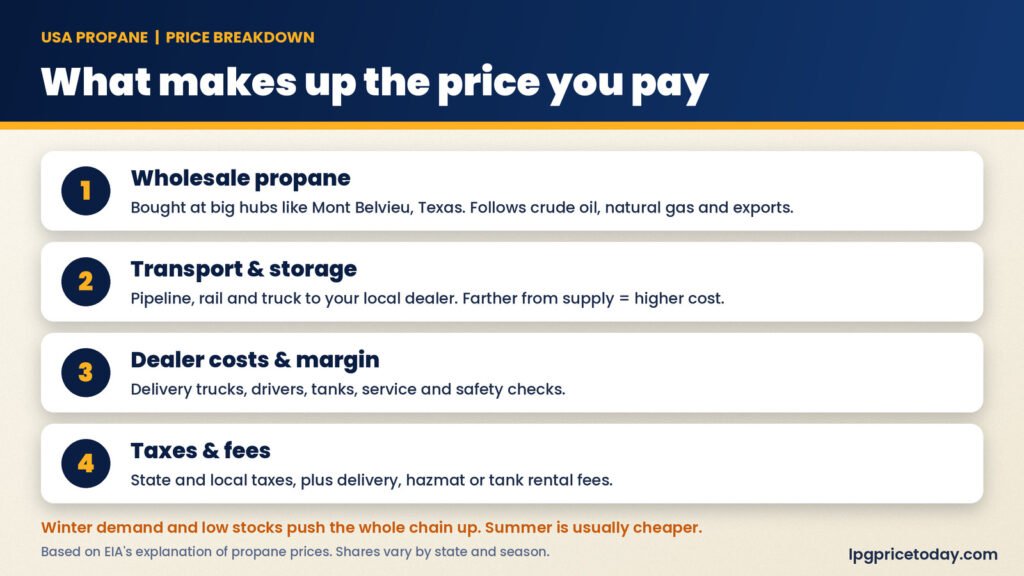
Propane prices follow the cost of the fuel itself, the cost of moving it and how much people need it. EIA explains that propane prices are linked to crude oil and natural gas, since propane comes from both (Source 3).
- Crude oil and natural gas: most US propane comes from natural gas processing and oil refining (Source 3).
- Wholesale hubs: the main US trading hub is Mont Belvieu, Texas. Dealers buy near these prices and add their costs.
- Exports: the US is now a big LPG exporter. Strong demand from Asia and Europe can lift US prices (Source 3).
- Winter demand and stocks: a cold snap raises demand fast. Low stocks before winter can push prices up.
- Transport: propane moves by pipeline, rail and truck. Areas far from supply pay more.
Why propane prices differ by state
States close to big supply and pipelines usually pay less. States at the end of long supply lines usually pay more. In EIA data, Midwest states such as North Dakota, Iowa and Nebraska are usually among the cheapest. The Northeast and Florida are usually among the most expensive (Source 1).
Local competition, taxes, weather and how many homes use propane also matter. EIA has no weekly figure for 12 states, including California and Arizona. For those states, ask several local dealers for quotes.
See every state’s latest EIA figure and how it changed this week on our propane prices by state page.
When propane is cheapest
Propane is usually cheapest in late spring and summer, when few homes need heat. Prices usually climb as winter demand builds.
Our check of EIA weekly history shows that the mid-January home price was higher than the late-October price in each of the 10 winters from 2016–17 to 2025–26 (Source 1). Past patterns do not guarantee future prices.
- Best time to fill: May to August, when dealers are less busy.
- Before winter: fill in early fall to avoid peak-season rush and price jumps.
- Avoid: emergency deliveries in January and February.
Residential vs wholesale vs spot price
The wholesale or spot price is what dealers pay for propane in bulk. The residential price is what homes pay for delivery. The gap covers transport, storage, trucks, staff, safety checks and the dealer’s margin.
| Price type | Who pays it | Where to see it |
|---|---|---|
| Spot price | Traders, at hubs like Mont Belvieu | EIA spot price data (Source 8) |
| Wholesale (rack) price | Propane dealers | EIA weekly wholesale price (Source 1) |
| Residential price | Homes with a tank | EIA weekly residential price (Source 1) |
That is why a big drop in oil or spot prices often reaches your bill slowly and only partly.
Propane contracts and hidden fees
The price per gallon is only part of your cost. The contract type and the fees can matter just as much. Always ask for the full price in writing.
Common contract types
- Fixed price (lock-in): you pay one set price for the season. It protects you if prices rise.
- Pre-buy: you pay up front for a set number of gallons, often in summer.
- Capped price: your price can go down but not above a set cap. There is often a fee.
- Budget plan: your yearly cost is split into equal monthly payments.
- Will-call vs automatic delivery: you order when you need it, or the dealer tracks your use and fills for you.
Fees to ask about
- Delivery or fuel surcharge
- Small-delivery or minimum-order fee
- Tank rental or lease fee
- Hazmat or environmental fee
- Leak check or safety inspection fee
- After-hours or emergency delivery fee
- Early cancellation or tank removal fee
For a fuller walkthrough of these charges see our guide to hidden fees in residential propane contracts.
Should you lock in your propane price? A lock-in makes sense if you want a steady budget and prices look likely to rise. If prices fall, you may pay more than the market. Read the terms on unused gallons.
How to get a better propane price
- Compare at least three local dealers. National brands and small local companies can quote very different prices for the same gallon.
- Fill up in summer. Demand is lower and dealers have more time.
- Own your tank. It lets you switch suppliers freely.
- Buy more at once. Larger deliveries usually cost less per gallon.
- Join a buying group or co-op. Groups can get volume prices.
- Check every fee. Compare the total cost, not just the price per gallon.
- Cut your use. Seal drafts, service your furnace and lower the thermostat at night.
Propane vs other home fuels
A gallon of propane holds less heat than a gallon of heating oil, so compare fuels by cost per unit of heat, not per gallon. EIA lists these heat contents (Source 4):
| Fuel | Unit | Heat content |
|---|---|---|
| Propane | 1 gallon | 91,452 Btu |
| Heating oil | 1 gallon | 138,500 Btu |
| Natural gas | 1 cubic foot | 1,036 Btu |
| Electricity | 1 kWh | 3,412 Btu |
Example: one gallon of heating oil gives about the same heat as 1.5 gallons of propane (138,500 ÷ 91,452). So propane at $3.00 a gallon costs about the same per unit of heat as heating oil at about $4.54 a gallon, before you count how efficient each heater is. (Example prices only.)
Piped natural gas is often cheaper where it is available. Propane is the main choice for homes beyond the gas pipelines.
LPG in the USA vs other countries
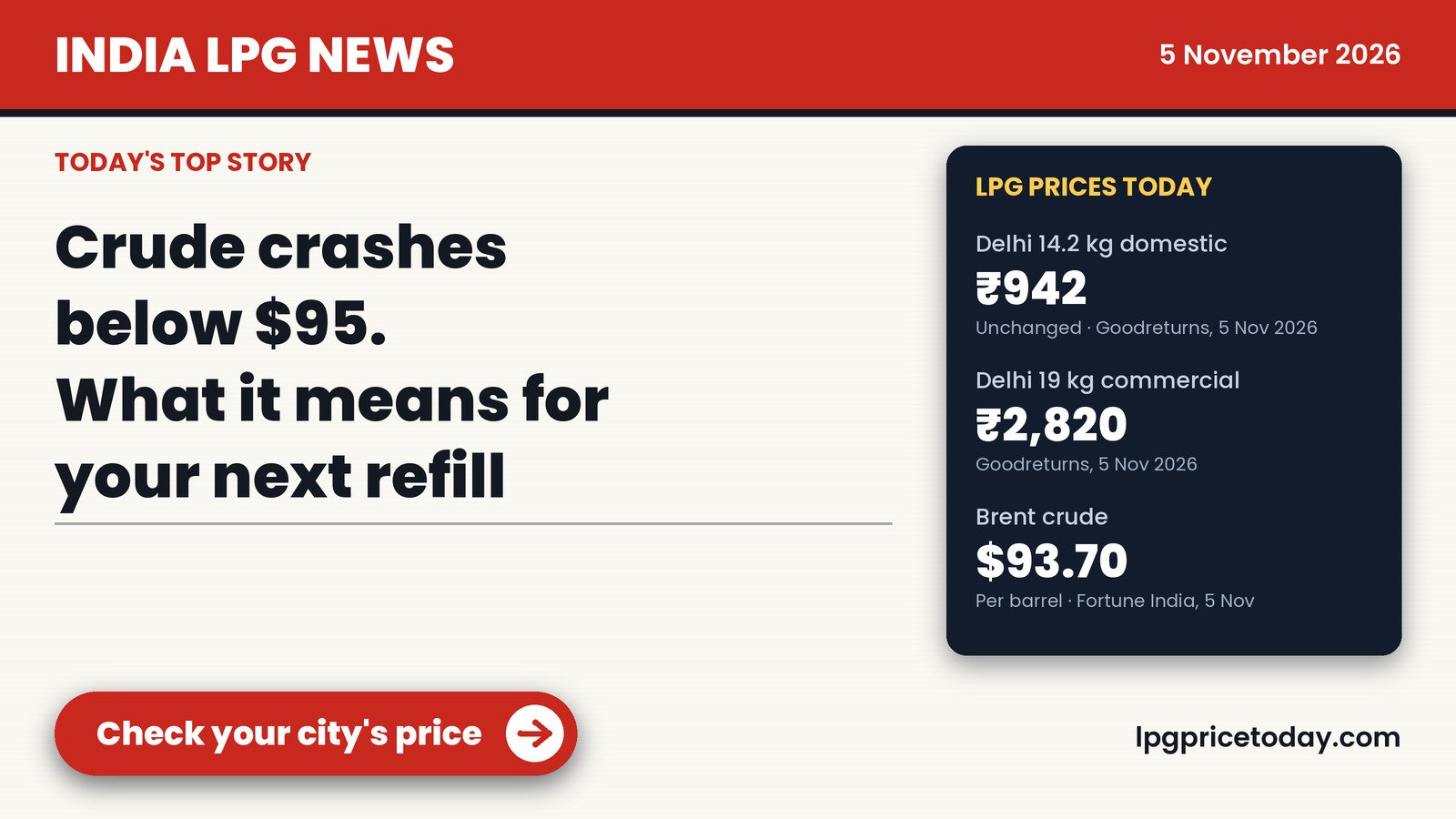
The USA sells LPG mostly by the gallon for home tanks. Most other countries sell it by the kilogram in cooking-gas cylinders. India, for example, sells a 14.2 kg home cylinder at prices set by state oil companies.
To compare, convert the US price per gallon to a price per kg with the table above. See LPG cylinder price today in India and LPG international prices for other markets.
Frequently asked questions
How much does propane cost per gallon right now?
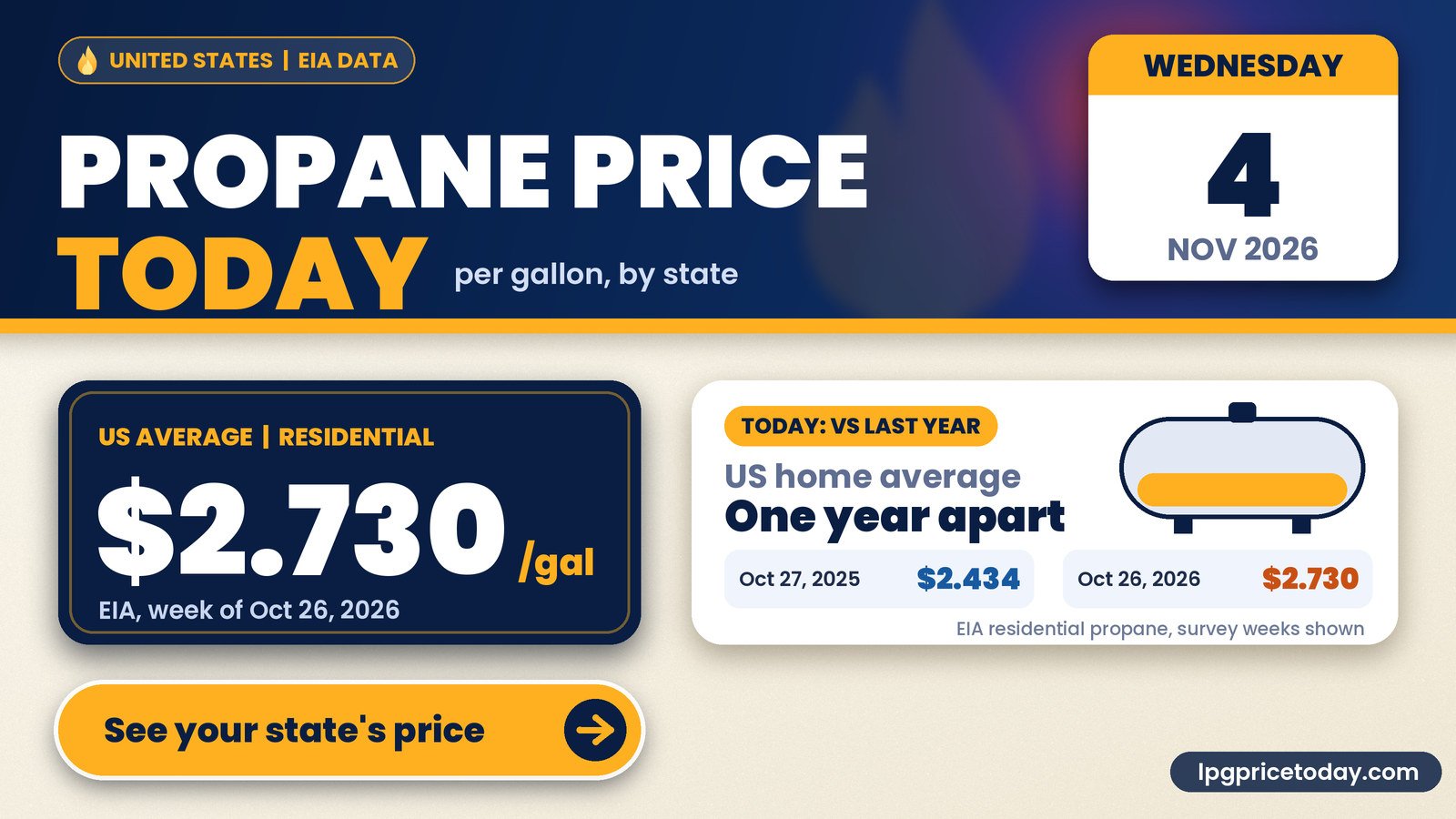
It changes every week, so we do not quote it in this guide. The benchmark is EIA’s weekly US average home propane price (Source 1). For the latest US average and every state’s price, see our propane price by state page.
What is the average price of LP gas in the USA?
The usual benchmark is EIA’s weekly US average residential propane price. It is collected every Monday from October through March in 38 states and excludes taxes (Source 2).
Is LPG the same as propane in the US?
Yes, in practice. LPG means liquefied petroleum gas. In the US, LPG sold to homes is almost all propane, so the names are used for the same fuel.
How much does it cost to fill a propane tank?
Multiply the gallons you need by your price per gallon, then add fees. Example: a 500-gallon tank at 30% needs about 250 gallons. At an example price of $3.00 that is $750 before fees.
How many gallons are in a 20 lb propane tank?
A full 20 lb cylinder holds about 20 pounds of propane, which is about 4.7 gallons (Sources 5 and 6).
How much is propane per pound?
Divide the price per gallon by 4.2. Example: $3.00 a gallon is about $0.71 a pound.
How do I convert LPG price per gallon to per liter or per kg?
Divide the price per gallon by 3.785 for liters or by about 1.9 for kilograms.
Why is residential propane more expensive than the wholesale price?
The home price adds transport, storage, delivery, safety and the dealer’s margin on top of the wholesale cost.
Should I lock in my propane price?
A lock-in gives a steady budget and protects you if prices rise. If prices fall you may pay more. Check fees and rules for unused gallons.
Which states have the cheapest propane?
In EIA data, Midwest states such as North Dakota, Iowa and Nebraska are usually among the cheapest. See the latest state ranking.
When is the cheapest time to buy propane?
Usually late spring and summer, when demand for heating is low.
Is propane cheaper than heating oil or electricity?
It depends on local prices and your heater’s efficiency. Compare cost per Btu: a gallon of propane has 91,452 Btu and a gallon of heating oil has 138,500 Btu (Source 4).
How we wrote this guide
This guide was written and reviewed by Abdul Basit, founder of lpgpricetoday.com. We use official data from the US Energy Information Administration (EIA) for prices and fuel facts. Tank sizes come from published supplier tank charts and the NFPA 58 fill rule. We do not publish estimated prices for states that EIA does not survey.
Last reviewed: November 5, 2026. We review this guide every quarter and when the EIA heating season starts and ends. For daily price changes, follow our LPG and propane news.
Sources
- Source 1: EIA: Weekly Heating Oil and Propane Prices, residential propane (and history)
- Source 2: EIA: Methodology for Weekly Retail Price Estimates of Winter Fuels
- Source 3: EIA: Prices for hydrocarbon gas liquids
- Source 4: EIA: British thermal units (Btu)
- Source 5: Propane cylinder and tank size chart (21st Century Energy Group)
- Source 6: Why portable propane tanks are measured in pounds (Greco Gas)
- Source 7: NFPA 58: Liquefied Petroleum Gas Code
- Source 8: EIA: Spot prices, including Mont Belvieu propane
